What is Zero Waste?
The Resource Recovery branch is responsible for the efficient reuse and redistribution of campus resources and manages our Zero Waste Program.
Zero Waste is the reduction of waste being sent to the landfill through both upstream (pre-consumer) and downstream (post-consumer) efforts. Achieving Zero Waste upstream can mean reducing the amount of disposable products purchased or changing food and shipping packaging. Achieving Zero Waste downstream can mean diverting materials to a recycling or compost facility instead of the landfill.




Goal
The University has a goal to demonstrate leadership in both the reduction and diversion of waste with anticipated outcomes including achieving Zero Waste and reducing per-capita waste generation.
Benefits
The environmental benefits of Zero Waste include:
- Resource and energy conservation
- Waste and pollution reduction
- Greenhouse gas reduction
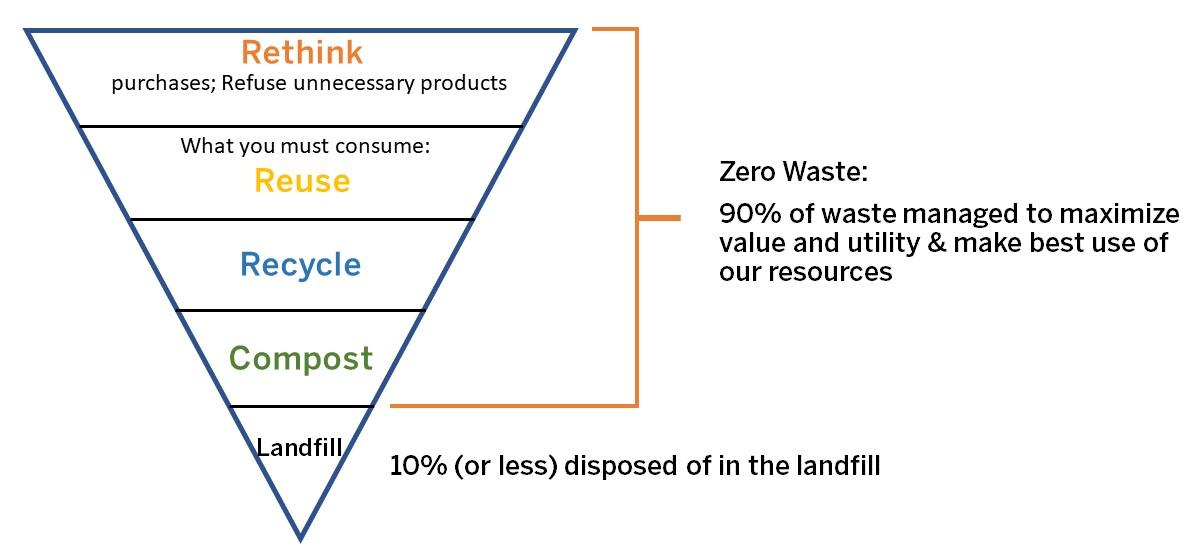
The waste hierarchy establishes priorities in sustainable materials management from most favorable to least favorable actions. Focusing on the upper tiers of the hierarchy has the largest potential for sustainable impact since end-of-life management is the weakest lever for change. The burden on disposal systems can be reduced through strategies such as reducing consumption as well as product redesign in order to reduce product toxicity and wasteful packaging as well as ensure compatibility with end-of-life diversion through recycling or composting. Waste reduction reduces our carbon impact. Learn strategies to work zero waste on campus and live zero waste in Austin.